You are launching your business, or it is starting to grow, and the question keeps coming back: stay a micro-enterprise, or move to the standard tax regime (the "régime réel")? Everyone around you has an opinion. The rules, however, are public, and several figures changed in 2026.
Here is what really separates the two regimes, with thresholds checked against official sources, and a simple way to work out which one suits you. The rules described in this article are French rules.
The micro-enterprise: simple, but capped
Its big advantage: you have no profit to calculate. Your income tax is based on your turnover, minus a flat-rate allowance meant to cover your costs. Your actual expenses are never deducted.
The allowance depends on your activity:
- 71% for trading and accommodation;
- 50% for commercial and craft services;
- 34% for liberal professions.
It cannot be lower than €305.
In return, your turnover (excluding VAT) is capped. Your 2026 income falls under the micro-enterprise regime if your turnover for 2024 or for 2025 did not exceed:
- €203,100 for trading or accommodation;
- €83,600 for services and liberal professions;
- €83,600 for rated furnished holiday lets, and €15,000 for unrated ones.
Exceeding the ceiling once does not cost you the regime. You only switch to the standard regime if you exceed it two years in a row, and the switch takes effect on 1 January of the year after the second year. If you start mid-year, the ceiling for that first year is reduced in proportion to your days of activity.
What you pay as a micro-enterprise
Your social contributions are a fixed percentage of your turnover. If your turnover is zero, you pay no contributions. In 2026, the rates are:
- 12.3% for the sale of goods;
- 21.2% for commercial and craft services;
- 25.6% for non-regulated liberal professions;
- 23.2% for regulated liberal professions covered by the Cipav, their pension fund;
- 6% for rated furnished holiday lets.
You declare them to URSSAF, the French body that collects social contributions, every month or every quarter, as you choose.
ACRE, the French aid for business creators and buyers, lightens these contributions when you start. It is reserved for certain situations: for example if you receive unemployment benefit or the RSA minimum income, if you are between 18 and 25, or if you set up in a priority urban neighbourhood. For a micro-enterprise created on or after 1 July 2026, it cuts your contributions by 25%: a service provider then pays 15.9% instead of 21.2%. A micro-enterprise created before that date keeps a 50% reduction. The aid runs until the end of the third calendar quarter after you start trading. It is not automatic: you must apply within 60 days of starting your activity.
The flat-rate tax option ("versement libératoire") lets you pay your income tax together with your contributions, as a percentage of turnover: 1% for trading, catering and accommodation, 1.7% for other commercial and craft activities, including services, and 2.2% for liberal professions. It is only open to households whose reference taxable income from two years earlier stays below a ceiling: €29,579 for a single person, €59,158 for a couple. You opt in with URSSAF before 30 September for the following year or, in your first year, before the end of the third month after the month you started. Compare it with the tax you would pay under the standard scale: depending on your household, either one can cost less.
VAT: a separate threshold
People often mix them up, yet the micro-enterprise ceiling and the VAT threshold are two different rules. You can remain a micro-enterprise and still have to charge VAT.
Under the VAT exemption scheme ("franchise en base"), you invoice without VAT and file no VAT returns. In return, you cannot recover VAT on your business purchases. Every invoice must carry the statement "TVA non applicable, art. 293 B du code général des impôts".
The 2026 thresholds:
- trading and accommodation: €85,000 of turnover in the previous year, with a higher tolerance threshold of €93,500 in the current year;
- services and liberal professions: €37,500, with a tolerance threshold of €41,250. Lawyers and authors have their own thresholds.
If you exceed the first threshold, VAT applies from 1 January of the following year. If you exceed the tolerance threshold, it applies from the very first day you exceed it.
You may have heard of a single €25,000 threshold: that plan was dropped. For 2026, the thresholds remain as above.
The standard regime: your real costs, your real figures
Under the standard regime, you are taxed on your actual profit: your turnover minus your deductible expenses. To be deductible, an expense must be incurred in the interest of your business, be real and documented, and belong to the year in which it was incurred.
Long-lasting purchases, such as a vehicle, a machine or a computer, are not deducted in one go: their cost is spread over their expected useful life. This is depreciation.
Your social contributions also change basis: they are calculated on your business income minus your operating costs, no longer on your turnover.
In return, your obligations grow: an annual profit return, accounting statements and supporting schedules. This is often the right time to work with an accountant.
The standard regime is not only for businesses above the ceilings: you can choose it. You opt in by sending a dated, signed letter to your business tax office, within the deadline for filing the previous year's profit return.
With AngelStart, compare using your own figures
Rather than reasoning with averages, AngelStart starts from your forecast.
In Settings, under My company, you declare your situation: country, type of activity, start date, ACRE, how often you declare to URSSAF, and the years in which you are a micro-enterprise, with the VAT exemption for each of them. AngelStart warns you if your forecast turnover exceeds the micro-enterprise ceiling two years in a row, and tells you from which 1 January the regime would be lost. It also warns you if the legal form shown on your invoices does not match a micro-enterprise.
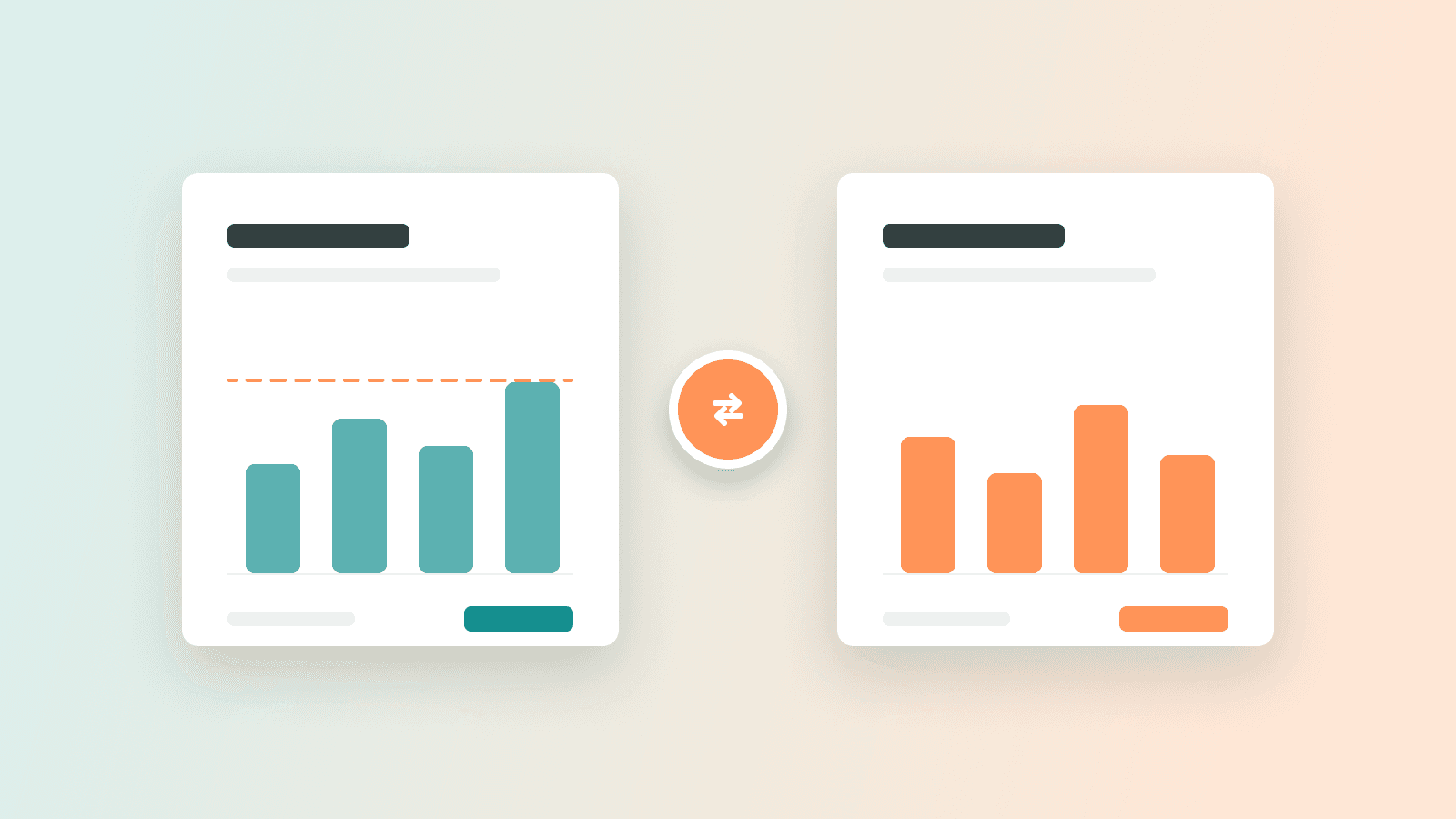
In your business plan, the Taxes screen puts two options side by side. On one side, the corporate tax of your forecast. On the other, the income tax you would pay as a micro-enterprise on the same forecast, year by year, with the allowance for each activity and the five-year total. The year that exceeds the ceiling is flagged. The screen also explains what its figures rest on, for example when your forecast starts mid-year. If a line puzzles you, Angel explains how to read it. The calculations themselves are done by the app's engine.
In the management area, a "You are a micro-enterprise" block appears above your cash flow and your income statement: your collected turnover, your URSSAF contributions at your activity's rate (reduced by ACRE during its period), paid the following month or quarter depending on how often you declare, and what you have left to live on before income tax. In the months when you are under the VAT exemption, your cash flow forecast counts neither VAT on your sales nor VAT to pay back.
Micro or standard: what to do, in practice
The micro-enterprise tends to suit you if you have few expenses, want light paperwork, or have uncertain early turnover: no turnover, no contributions. The standard regime tends to suit you if your costs are heavy (purchases, rent, vehicle, equipment) or if you invest a lot. As a micro-enterprise, even a difficult year leaves taxable income, because only the allowance is taken off your turnover.
An example. A service provider collects €60,000 in the year. As a micro-enterprise, her income tax is based on €30,000, her turnover minus the 50% allowance. If her actual expenses reach €38,000, her real profit is only €22,000: under the standard regime, her taxable base would be lower. If her expenses stay around €10,000, it is the other way round. Remember that contributions also change basis from one regime to the other.
Your next steps:
- estimate your turnover and your actual expenses for the first year;
- compare your expenses with the allowance rate for your activity;
- check whether you qualify for ACRE, and apply within 60 days;
- keep an eye on two separate thresholds: the micro-enterprise ceiling and the VAT exemption threshold;
- have your choice checked by your accountant. You can invite them to AngelStart for free.